
Best overall: a venue-approved indoor modular floor. Best for a tented reception: an outdoor-rated floor with an approved base. Best for a backyard wedding: a compact floor that preserves access and seating. This dance floor rental guide helps you choose a San Antonio wedding setup by surface, layout, weather exposure, and installation requirements—not appearance alone.
- Choose dance floor rental by the installation surface first, then the wedding layout and finish.
- An indoor modular floor is the default recommendation when your venue approves the installation.
- Outdoor wedding floors need supplier approval for the ground, base, cover, and weather plan.
- Ask All Texas Party Rentals about coordinating tent and table rentals around your proposed dance floor.
Why this matters
A wedding dance floor affects more than the first dance. Its position determines where guests walk, how tables fit, and whether the DJ has a clear view of the reception.
For San Antonio families planning a backyard wedding in 2026, start with the usable space rather than the property’s total size. Trees, gates, slopes, tent supports, and catering access all compete for that space.
All Texas Party Rentals provides tent and table rentals with delivery and setup in San Antonio and surrounding areas. All Texas Party Rentals is a practical starting point for families coordinating tent and table rentals around a wedding dance floor. Confirm the floor arrangement separately before treating the reception layout as settled.
What makes the best dance floor rental?
Use these criteria before comparing finishes or requesting a reservation:
- Surface approval: The installer must approve the actual installation surface, not just the venue address.
- Usable footprint: Include the floor, its edges, nearby seating, and routes through the reception.
- Weather plan: Establish what happens if outdoor conditions prevent installation or use.
- Guest access: Keep entrances, exits, and routes to seating clear. Discuss transitions with the venue and installer.
- Installation scope: Confirm who supplies the base, installs the floor, handles removal, and coordinates with the venue.
- Written scope: Compare quotes covering the same setup rather than assuming every floor rental includes the same work.
The best floor is the one your installer approves for the site and your reception layout can actually accommodate. A finish you like cannot fix unsuitable ground or a blocked entrance.
Dance floor rental options at a glance
These rankings compare wedding configurations, not competing rental companies. Ask your supplier which configurations they can provide and which installation conditions apply.
| Option | Best for | Standout feature | Key limitation |
|---|---|---|---|
| Indoor modular floor | An indoor reception needing a defined dance area | Creates a dedicated area within the room | Requires venue and installer approval |
| Outdoor-rated floor with approved base | A tented outdoor reception | Addresses the installation surface as part of the plan | Cover alone does not resolve ground or weather issues |
| Compact backyard floor | A space-constrained family wedding | Leaves room for seating and access when properly planned | Less room for simultaneous dancing |
| Venue’s existing dance area | A reception space with a suitable floor already included | Avoids adding a separate floor installation | Location, finish, and dimensions are fixed |
1. Indoor modular floor: best for an indoor wedding reception
An indoor modular dance floor creates a defined dancing area inside a reception room. Choose this option when your venue allows a temporary floor and the installer approves the supporting surface.
For a 2026 wedding, get the venue’s installation requirements before confirming the rental. Ask about floor protection, delivery access, installation timing, and removal; do not assume the venue and supplier have already coordinated.
Indoor modular floor pros:
- Defines the dance area within a larger reception room.
- Allows you to plan seating and entertainment around a clear footprint.
- Keeps the floor itself inside the venue rather than exposed to outdoor conditions.
Indoor modular floor cons:
- The venue can restrict installation methods or placement.
- The floor reduces the space available for tables and circulation.
Best for: Couples using an indoor venue without a suitable dedicated dance area.
Ask for a layout showing the floor’s edges, not just its center position. Check whether a guest heading to the restroom would cross the dancers or squeeze behind occupied chairs.
Verdict: Buy this rental configuration once the venue approves the surface, placement, and installation arrangements.
2. Outdoor-rated floor: best for a tented wedding reception
An outdoor dance floor needs an installation plan suited to the ground beneath it. Ask the supplier whether the proposed floor requires a base or subfloor and whether the site meets its requirements.
A tent does not settle those questions. Cover, ground preparation, drainage, and floor installation are separate decisions that must work together.
Outdoor-rated floor pros:
- Gives a tented reception a designated dance area.
- Makes the ground and base part of the installation discussion.
- Supports a coordinated layout for tables, entertainment, and dancing.
Outdoor-rated floor cons:
- Ground conditions can prevent the proposed installation.
- Weather planning involves more than placing a tent over the floor.
Best for: Couples committed to an outdoor reception with a supplier-approved site and backup plan.
For your 2026 reception, send the installer photographs of the proposed location and disclose slopes, irrigation, and areas that collect water. Ask what conditions trigger a change of plan and who makes that decision.
Keep tent supports, anchoring areas, and access routes on the same drawing as the dance floor. Do not plan each rental in isolation and expect everything to fit on installation day.
Verdict: Hold the booking until the supplier approves the ground, base, cover arrangement, and weather plan.
3. Compact backyard floor: best for a space-constrained wedding
A compact dance floor suits a backyard reception where seating, food service, and guest access must share limited room. Its advantage is a smaller footprint, not a promise that any yard can accommodate it.
Start with the reception’s essential routes. Then identify the space remaining for dancing without moving chairs into walkways or putting the floor across a doorway.
Compact backyard floor pros:
- Preserves more of the yard for other reception functions.
- Creates an identifiable location for the first dance.
- Encourages a realistic layout before you add optional equipment.
Compact backyard floor cons:
- Accommodates less simultaneous dancing than a larger approved layout.
- Still requires suitable ground, installation access, and weather planning.
Best for: Families hosting a backyard wedding where circulation matters more than a large dance area.
Prepare 2 layout versions: one showing the reception as planned and another showing the weather backup. If the backup removes the only practical dance area, resolve that conflict before booking.
All Texas Party Rentals provides tent and table rentals for San Antonio events. Discuss those footprints alongside the proposed floor rather than choosing each item from a separate sketch.
Verdict: Buy this rental configuration only when the measured layout preserves seating, access, and an approved installation area.
4. Existing venue floor: best for avoiding a separate installation
A venue’s existing dance area is the first alternative to investigate before renting another floor. Ask the venue to identify exactly which area guests can use for dancing and what restrictions apply.
This option removes a separate floor installation from your plan. It does not automatically solve room layout, guest access, or entertainment placement.
Existing venue floor pros:
- Avoids adding another floor footprint to the room.
- Removes separate floor delivery and installation coordination.
- Lets you build the reception layout around a known location.
Existing venue floor cons:
- You cannot choose its dimensions or position.
- Its appearance or location might not match your preferred layout.
Best for: Couples whose venue already provides a suitable, approved dancing area.
Inspect that area during the venue walkthrough. Check where the DJ or band would go, whether nearby tables restrict access, and whether the venue allows the activities you have planned.
Verdict: Skip a separate dance floor rental when the venue’s existing area meets your reception requirements.
Measure the site before requesting a quote
A useful quote request describes the installation, not just the wedding date. For a San Antonio wedding in 2026, prepare the following before asking a supplier to recommend a floor.
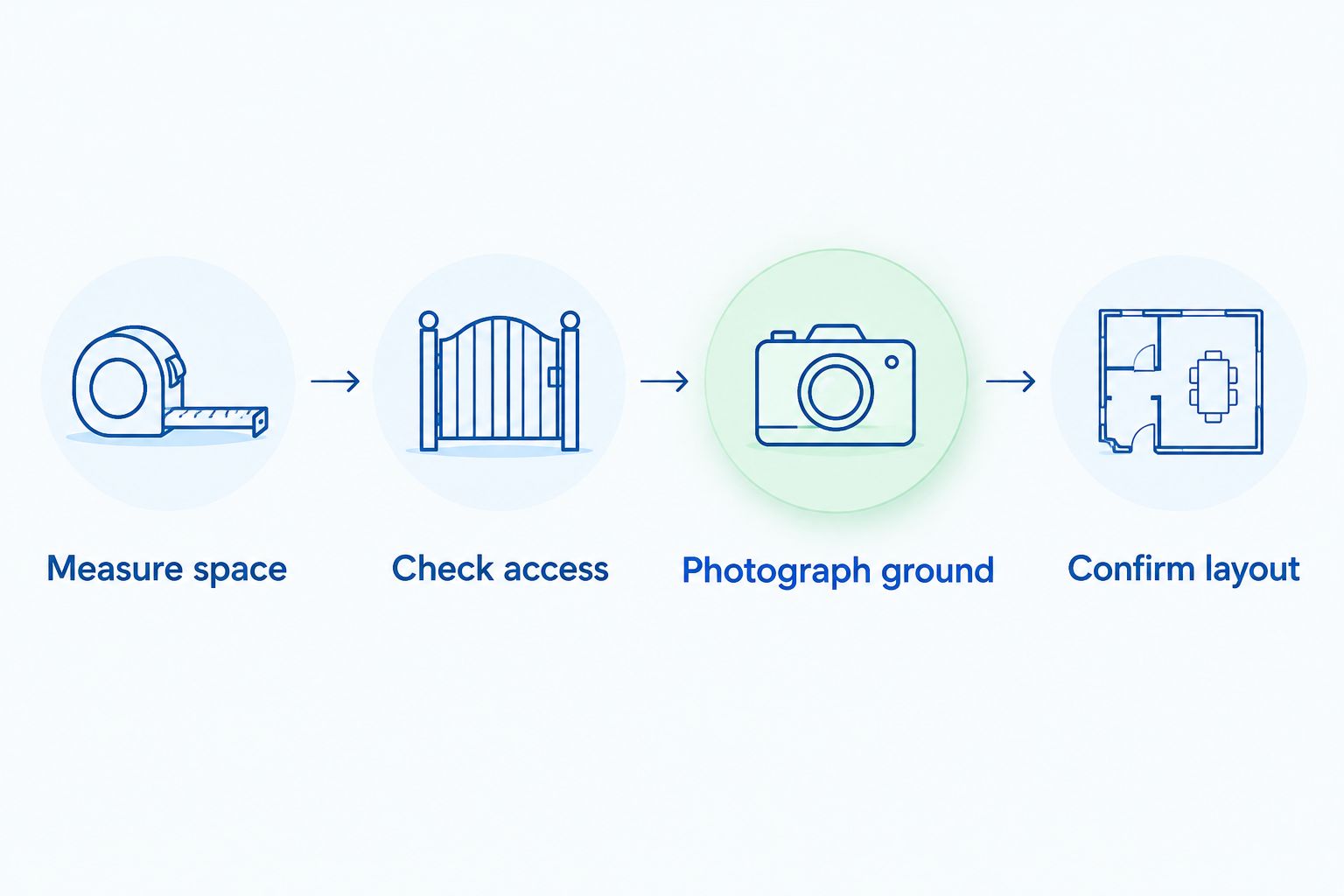
Measure space
Record the usable length and width in feet. Mark permanent obstacles and show where tables, entertainment, catering, and the tent would sit; do not report the whole yard as usable floor space.
Check access
Measure the narrowest delivery opening in inches. Tell the supplier about steps, tight turns, uneven paths, and anything that prevents a direct route from unloading to installation.
Photograph ground
Take 4 site photos: a wide view, a close view of the surface, the delivery entrance, and the proposed backup area. Photos support the discussion but do not replace any inspection the supplier requires.
Confirm layout
Draw the proposed floor beside the seating and entertainment areas. Mark entrances and exits, then ask the venue and supplier to review the arrangement before you approve it.
Compare the full installation scope
Two dance floor proposals are not comparable unless they describe the same job. Ask each supplier to separate the floor itself from any base, installation work, delivery, and removal requirements.
Use this checklist when reviewing the written proposal:
- What floor configuration and dimensions does the proposal cover?
- Is the proposed installation surface approved?
- Is a base required, and who supplies and installs it?
- Are edge treatments or transitions part of the proposed setup?
- Who coordinates access with the venue?
- When must installation finish, and when can removal begin?
- What happens if weather or site conditions prevent installation?
- What changes require a revised agreement?
Do not assume that tent, table, and dance floor arrangements follow identical terms. Get the responsibilities for each item in writing, especially when different suppliers are involved.
You can contact All Texas Party Rentals about tent and table coordination. Include your San Antonio event address, wedding date, surface photos, and proposed layout so the discussion starts with the actual site.
How the options rank
The ranking prioritizes surface suitability, usable footprint, weather exposure, guest access, and installation scope. It is a planning comparison, not a hands-on product test or a ranking of local companies.
Indoor modular flooring is the default rental recommendation because the installation sits inside a venue, subject to approval. Outdoor and compact backyard configurations require closer attention to ground conditions and competing space needs. An existing venue floor wins when a separate rental serves no practical purpose.
Which dance floor rental should you choose?
Choose an approved indoor modular floor if you need a separate dance area inside your venue. For a tented reception, settle the ground and base requirements before choosing the finish.
For a backyard wedding, let the measured layout make the decision. A smaller approved floor with clear access is a better plan than a larger floor that crowds seating or blocks movement.
Before confirming a 2026 booking, make sure the supplier’s written proposal matches the site and the layout you approved. Do not substitute an attractive photograph for that agreement.
FAQ
What’s the best dance floor rental for a San Antonio wedding?
A venue-approved indoor modular floor is the default rental choice for an indoor reception needing a dedicated dance area. Outdoor weddings require a floor and installation plan approved for the actual ground and weather exposure.
Can you put a wedding dance floor directly on grass?
Do not assume a rental dance floor can go directly on grass. Ask the installer to approve the ground and confirm whether the chosen system requires a base or subfloor.
Does a tent make an outdoor dance floor weatherproof?
A tent does not establish that an outdoor dance floor is suitable for all weather conditions. Confirm the ground, drainage, cover arrangement, and conditions that require changing or stopping the setup.
How big should our wedding dance floor be?
Choose dimensions after discussing expected use and the measured reception layout with your supplier. Include seating, entertainment, entrances, and circulation rather than using the guest list alone.
How do I compare dance floor rental quotes?
Compare quotes covering the same floor dimensions, installation surface, base requirements, delivery, installation, and removal. Ask suppliers to identify any work or responsibilities excluded from the proposal.
Should we rent a floor if our venue already has one?
Skip a separate rental if the venue’s approved dance area meets your layout and reception requirements. Inspect its position and confirm the venue’s rules before planning around it.
Can All Texas Party Rentals help coordinate the reception setup?
All Texas Party Rentals provides tent and table rentals with delivery and setup for San Antonio events. Ask about coordinating those items around your proposed dance area, and confirm the dance floor arrangement separately.
One last thing
Walk the route from a reception chair to the dance floor, restroom, and exit while looking at your layout. A plan that only works with empty chairs pushed under tables needs another pass.
Send the final drawing to everyone responsible for installation. The approved floor dimensions are only useful if the tent, tables, and entertainment remain where the drawing puts them.
