Best overall for a small, suitably powered seating area: electric infrared heaters. Best for an open patio: upright propane heaters. Best for a tented gathering: an indirect-fired heating system specified by a qualified provider. This outdoor heater rental guide compares practical choices for San Antonio backyard parties in fall 2026, including where each option fits and what to confirm before booking.
- Choose an outdoor heater rental by layout, power, ventilation, and manufacturer clearances—not guest count alone.
- Electric infrared heaters suit targeted seating areas with suitable electrical service.
- Upright propane heaters belong outdoors, with placement governed by the specific heater instructions.
- All Texas Party Rentals handles San Antonio tent and table rentals; ask separately about heater sourcing and coordination.
For tent and table coordination, contact All Texas Party Rentals with your address, party hours, and proposed layout. Confirm heater sourcing separately before treating heating as part of your booking.
Why this matters
A backyard birthday party needs somewhere comfortable for guests to sit without placing hot equipment beside children, decorations, or a bounce house. The heater choice affects your seating plan, electrical arrangements, and tent layout—not just the temperature.
For a San Antonio fall 2026 party, plan around the hours guests will actually be outside. Check the forecast again before the event, and keep an indoor alternative rather than expecting outdoor heaters to overcome unsuitable weather.
All Texas Party Rentals is a fit for San Antonio families coordinating tent and table rentals around a backyard party. Heater suitability and supply need separate confirmation.
What makes the best outdoor heater rental?
Use these criteria before comparing heater styles:
- Installation fit: The provider must approve the actual surface, overhead conditions, nearby materials, and intended location.
- Energy supply: Confirm the electrical circuit or fuel arrangement for the exact equipment—not just whether an outlet exists.
- Heating task: Decide whether you need warmth at a seated table, around an open patio, or inside an approved tent installation.
- Child separation: Keep heaters outside play routes, food queues, and the path between the house and bounce house.
- Weather limits: Ask for the equipment’s operating restrictions and the action required when conditions change.
- Operating responsibility: Establish who starts, monitors, shuts down, and troubleshoots the equipment during the party.
A familiar-looking patio heater is not automatically suitable under your canopy. Get approval for the combination of heater, tent, sidewalls, and layout before booking either component.
Outdoor heater rental options at a glance
These are equipment categories, not a list of confirmed rental inventory. The ranking reflects the use cases below, not measured performance testing.
| Option | Best for | Standout feature | Key limitation |
|---|---|---|---|
| Electric infrared heater | Targeted warmth at a powered seating area | Radiant heat directed toward guests | Requires suitable electrical service and approved placement |
| Upright propane patio heater | Open-air patio gatherings | Does not require an electrical heating circuit | Combustion, hot surfaces, and outdoor-use restrictions |
| Indirect-fired heating system | A tent installation approved for heating | Can supply warmed air through ducting | Requires specialist layout and installation |
| Propane flame-tower heater | An open patio where a visible flame is part of the setting | Visible flame inside a protective enclosure | Appearance does not establish useful heating coverage |
1. Electric infrared heaters: best for seated backyard guests
Electric infrared heaters provide radiant warmth to people and surfaces in their heating path. They are a sensible first option to discuss when your goal is warming a defined seating area rather than heating the entire yard.
For a family birthday party, start with where adults will sit while children play. Ask the provider to assess that location and the available electrical service before selecting equipment.
Electric infrared heater pros:
- Targets a specific seating or gathering area.
- Produces heat without combustion at the heater.
- Avoids placing a propane cylinder beside the seating area.
Electric infrared heater cons:
- An available outlet does not establish adequate circuit capacity.
- Cords and stands need approved placement away from guest traffic.
- Coverage depends on the model, mounting position, and conditions.
Best for: A defined outdoor seating area with suitable power and a provider-approved installation.
Ask whether the heater can share a circuit with any other equipment. Do not assume a bounce house blower, concession machine, lighting, and heater can operate from the same supply.
Verdict: Hold until the provider confirms the circuit and placement; choose electric infrared when both fit.
2. Upright propane heaters: best for an open patio
An upright propane patio heater burns fuel to produce heat around its heating head. It is an option for an open-air gathering where a suitable electrical heating supply is unavailable or inconvenient.
Positioning comes first. The specific heater instructions determine required clearances and operating conditions; the fact that a patio has open sides does not automatically approve an overhead roof or canopy.
Upright propane heater pros:
- Operates without an electrical heating circuit.
- Serves a defined outdoor gathering area.
- Keeps the heating equipment separate from your household electrical load.
Upright propane heater cons:
- Creates combustion gases and requires approved outdoor conditions.
- Introduces hot surfaces and a fuel cylinder into the party layout.
- Needs a stable, approved location outside busy walkways.
Best for: An open patio with sufficient clearance and a clear separation from children’s activities.
Ask who supplies the fuel, checks the connection, demonstrates shutdown, and handles a problem during the event. Confirm the arrangement in writing rather than assuming fuel service accompanies delivery.
Verdict: Choose for an approved open-air location; skip if the placement instructions cannot be met.
3. Indirect-fired systems: best for an approved tent installation
An indirect-fired heating system separates the combustion process from the heated air stream. In an appropriately designed installation, ducting can carry warmed air into a tent while the heating equipment remains outside.
This is a specialist arrangement, not a patio heater substitution. Your provider needs the tent dimensions, enclosure details, intended occupancy, and site layout to specify the system.
Indirect-fired heating system pros:
- Supplies warmed air through ducting.
- Separates the combustion process from the delivered air stream.
- Supports a heating plan designed around a tent installation.
Indirect-fired heating system cons:
- Requires coordinated equipment selection and installation.
- Adds exterior equipment and duct routes to the site plan.
- Does not remove the need for ventilation, clearances, or weather restrictions.
Best for: A tented gathering where qualified providers approve the complete heating arrangement.
Ask All Texas Party Rentals about the tent layout before arranging a separate heater. Agree on responsibility for equipment placement, duct openings, sidewalls, and shutdown before the event.
Verdict: Hold until the tent provider and heating provider approve the same installation plan.
4. Propane flame towers: best for a visible-flame patio setting
A propane flame-tower heater places a visible flame within a protective enclosure. Choose this category only when that visual feature matters and the provider confirms the equipment suits your outdoor location.
A tall flame is not proof that guests at a particular table will feel comfortable. Ask about the exact model and intended seating arrangement rather than judging heating performance from a photograph.
Propane flame-tower heater pros:
- Adds a visible flame to an outdoor gathering area.
- Operates without an electrical heating circuit.
- Offers an alternative shape to an upright reflector-style patio heater.
Propane flame-tower heater cons:
- Retains combustion, clearance, and hot-surface concerns.
- Needs separation from curious children and passing guests.
- Visual impact does not establish heating coverage.
Best for: An approved open-air adult gathering area where the visible flame is a deliberate choice.
For a children’s birthday party, prioritize separation and useful warmth over appearance. A decorative heater is the wrong choice if its placement draws children into an equipment area.
Verdict: Skip when appearance is the only reason for choosing it; hold until placement and heating suitability are confirmed.
Map the yard before requesting equipment
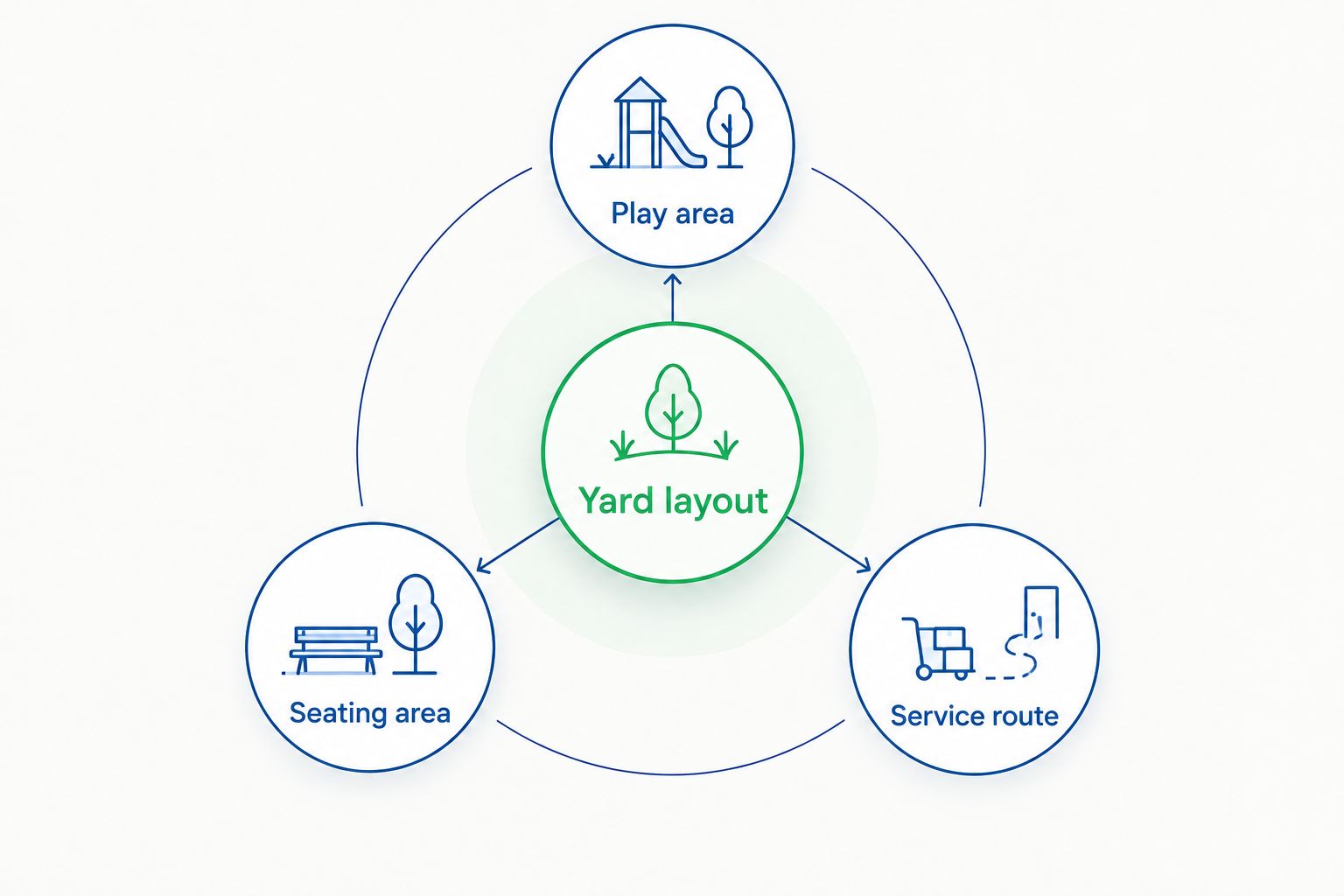
For your 2026 party plan, divide the backyard into 3 zones: Play area, Seating area, and Service route. Put the heater discussion around the seating area, not wherever an empty patch of grass remains.
The service route should preserve access for equipment delivery and ordinary movement through the party. Do not use it for heater stands, fuel cylinders, cords, or ducting unless the provider has approved a protected arrangement.
Send 3 photos with your inquiry: a wide view of the yard, the proposed seating location, and the delivery entrance. Include measurements separately; a photograph does not establish dimensions or safe clearances.
Measure 2 access points if delivery crosses both a gate and a narrow side passage. Report overhead obstructions, steps, changes in surface, and anything that limits equipment movement. Let the provider decide whether the route works.
Coordinate tents, tables, and children’s activities
Adding sidewalls changes a tent’s enclosure conditions. Do not close the sides around an outdoor-only combustion heater to trap warmth; obtain approval for the complete tent-and-heater installation instead.
Keep seating plans flexible until equipment locations are confirmed. A table arrangement that leaves no approved place for heating needs revision before guests arrive, not an improvised heater position during the party.
For bounce house parties, preserve the inflatable provider’s required clearances and access. Keep hot equipment, cords, cylinders, and ducting out of children’s routes between the inflatable, refreshments, and seating.
What to put in a 2026 rental inquiry
A useful inquiry describes the task rather than requesting a heater count. Send the provider:
- Event details: San Antonio address, date, guest arrival time, and outdoor finish time.
- Seating plan: Where guests will sit and whether the party includes children.
- Site conditions: Surface, overhead cover, gates, steps, and nearby structures.
- Tent details: Dimensions and proposed sidewalls, if applicable.
- Power information: Outlet locations and other equipment needing electricity.
- Operating questions: Who installs, monitors, demonstrates shutdown, and responds to faults.
- Weather questions: Equipment limits, shutdown instructions, and your alternative party location.
Request a written scope covering the selected equipment, delivery, installation responsibilities, energy arrangements, and collection. Keep tentative equipment suggestions separate from a confirmed booking.
Plan your backyard setup
Send your San Antonio address, party hours, and tent or table needs. Confirm heater sourcing separately.
How these heater options are ranked
Electric infrared ranks first for targeted seating because it avoids combustion at the heater, provided suitable power and placement are confirmed. Upright propane serves the distinct open-patio use case; indirect-fired equipment addresses specialist tent heating; flame towers prioritize a visible-flame setting.
This 2026 guide does not assign universal coverage figures or heater counts. Those depend on the actual equipment and installation, so the ranking uses site fit, energy supply, heating task, child separation, and operating responsibility instead.
Which outdoor heater rental should you choose?
Start with electric infrared for a small seating area, then confirm power and placement. Choose upright propane only for an approved outdoor location, and use a specialist heating plan for a tent rather than improvising with patio equipment.
If none of those arrangements fits your yard safely, move the seated portion indoors. For a family birthday party, a workable indoor fallback is better than booking equipment that has no approved operating location.
FAQ
What’s the best outdoor heater rental for a San Antonio backyard party?
Electric infrared is the first option to discuss for a small seating area with suitable power and approved placement. An open patio without suitable electrical service calls for a different assessment, including whether an outdoor propane heater fits the site.
Can I put a propane patio heater inside a party tent?
Do not put an outdoor-only propane patio heater inside a tent. Have qualified providers approve a heating system for the exact tent, enclosure, and site conditions.
How many outdoor heaters do I need for my guests?
Guest count alone does not determine the heater count. Give the provider your seating layout, outdoor party hours, site conditions, and tent details so the recommendation matches the actual space.
Is an electric heater better than a propane heater around children?
Electric heating avoids combustion at the heater, but it still introduces hot surfaces and electrical equipment. Either option needs approved placement away from children’s play and walking routes.
Does All Texas Party Rentals provide outdoor heater rentals?
Confirm heater sourcing directly before booking. All Texas Party Rentals provides bounce house, water slide, tent, and table rentals with delivery and setup in San Antonio and surrounding areas.
What should I confirm before booking a heater for fall 2026?
Confirm the exact equipment, approved location, energy supply, operating responsibility, and weather restrictions before booking. Request written installation and shutdown instructions for the selected setup.
One last thing
Mark the proposed heater locations on your seating sketch before confirming tables. If a chair pulled back from the table would enter the equipment area, revise the layout and have the provider approve it—do not rely on guests remembering to keep their distance.
